
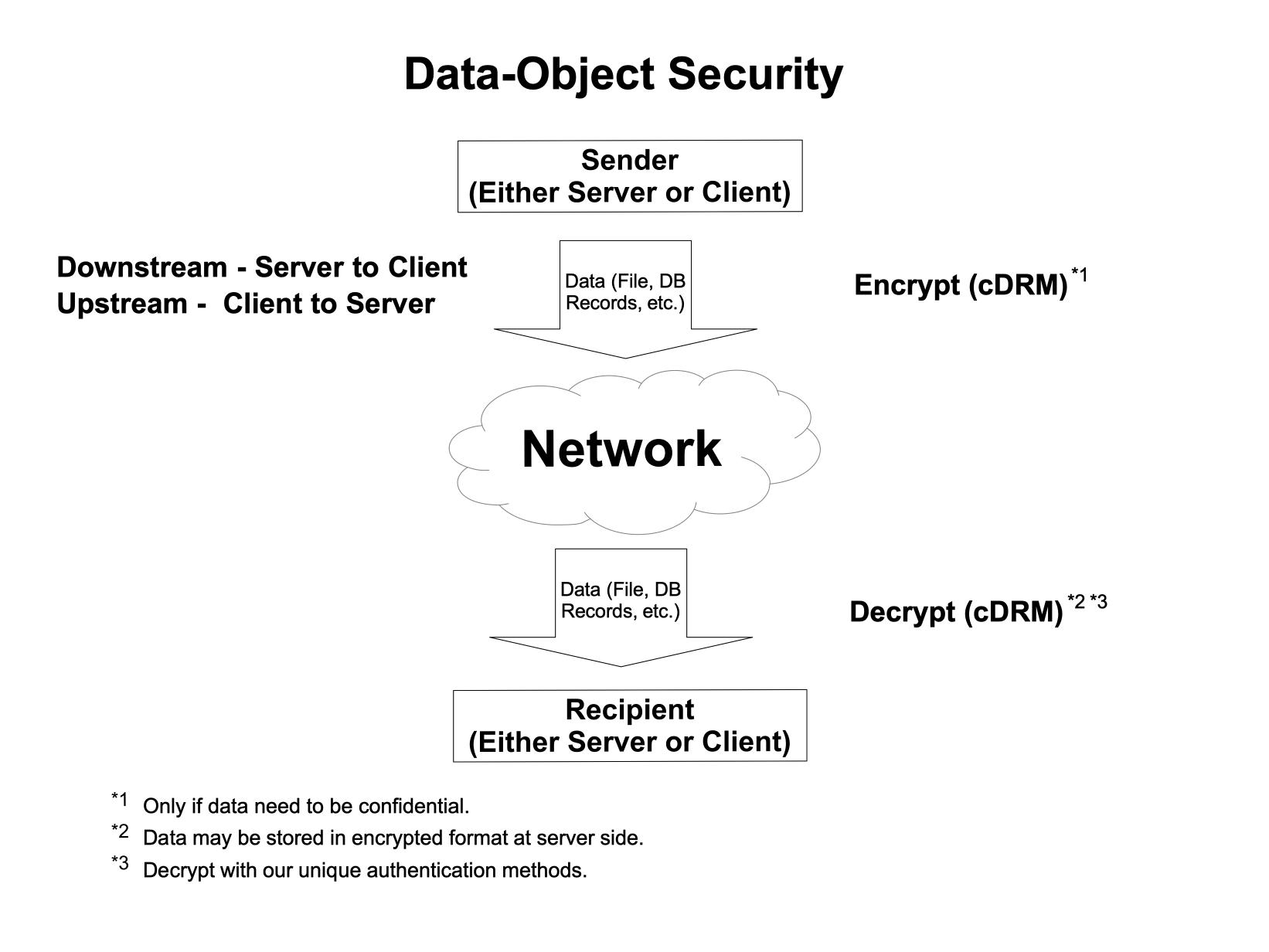
Cryptsonic’s cDRM model can function as a secure overlay for protected digital objects delivered over networks and other digital distribution environments.
Under this approach, protected content is not simply released as an unrestricted file. Instead, content remains under controlled execution, and access is governed by authorization rules such as user identity, device, time, and other policy conditions. This allows content owners, service providers, and distributors to offer convenient access while maintaining stronger protection against unauthorized use.
Rather than depending solely on conventional file-based DRM, Cryptsonic’s approach treats secure rendering as the central control point. In this way, cDRM extends digital rights protection from the file layer to the execution endpoint.
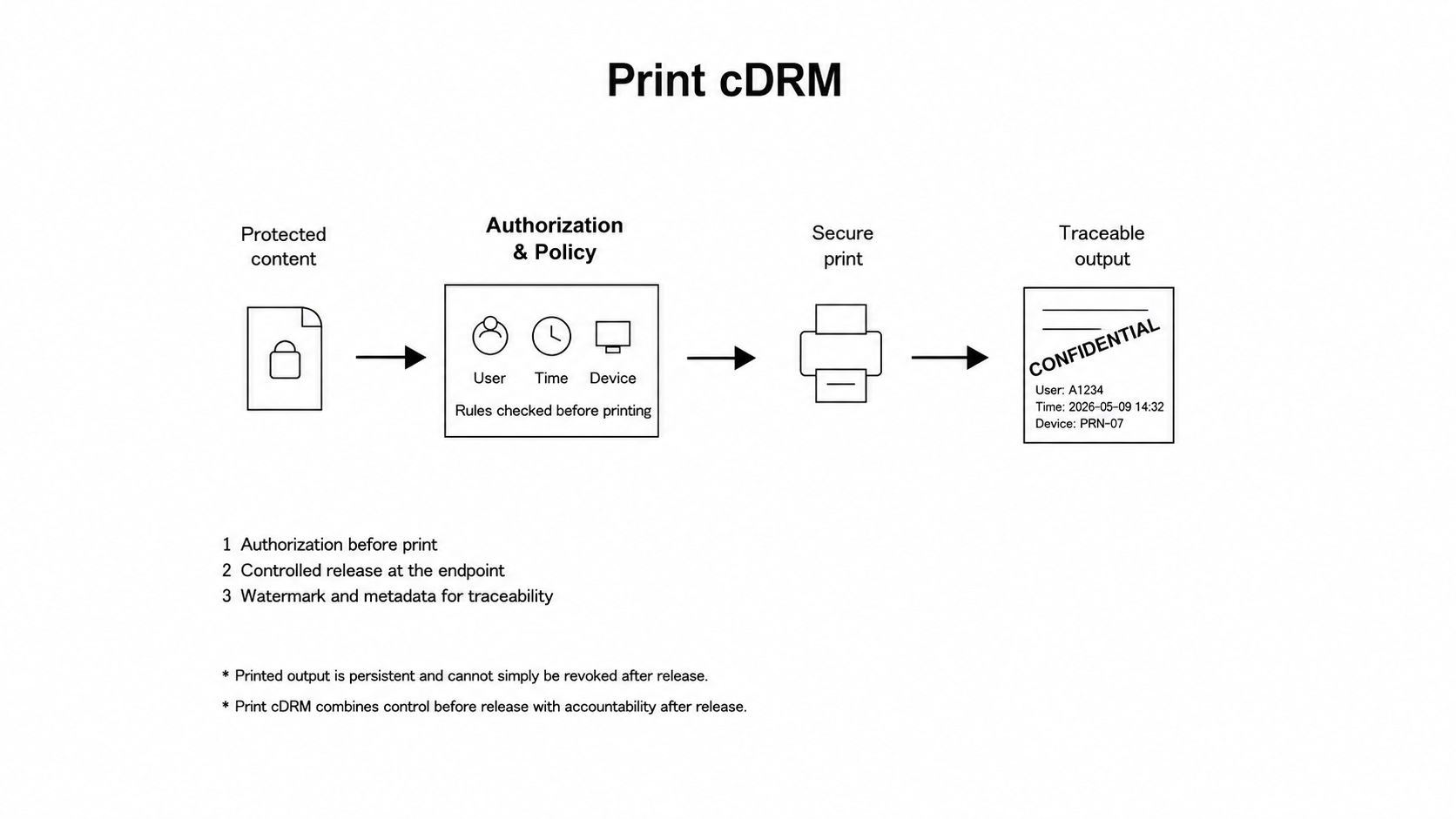
Cryptsonic is developing cDRM as a secure digital content architecture for controlled display and printing. Unlike conventional DRM, which primarily focuses on protecting the file itself, cDRM is based on execution-controlled rendering. Protected content is not treated as an ordinary open file. Instead, access and rendering are governed by policy at the output endpoint, where content is displayed or printed only under authorized conditions.
The core principles of cDRM are:
Copy Resistance | Control | Traceability
This architecture is designed to support secure digital content access in environments where unauthorized copying, redistribution, and transformation are increasingly easy. cDRM provides a framework in which content can remain protected while still being made available to authorized users under controlled conditions.